Over Half of World's Largest Lakes Losing Water
Trill News Briefing
The Story
More than half of the world's largest lakes are losing water, a study in Science found, blaming a warming climate and unsustainable human consumption.
A team led by Fangfang Yao used 250,000 satellite snapshots from 1992 to 2020 and water levels from nine satellite altimeters to survey 1,972 of Earth's biggest lakes.
In all, 53 percent of lakes saw their water storage decline, a loss the authors compare to 17 Lake Meads, the largest reservoir in the United States.
Climate change and human water consumption dominated the net decline in natural lakes, while sedimentation dominated losses in reservoirs, nearly two thirds of which lost significant water.
Yao said many human and climate footprints on lake losses were previously unknown, such as the drying of Lake Mar Chiquita in Argentina.
About 24 percent of lakes saw significant gains, and Armenia's Lake Sevan has stored more water over the last 20 years, which the authors linked to enforcement of conservation laws on water withdrawal since the early 2000s.
The authors estimate roughly one quarter of the world's population, 2 billion people, lives in the basin of a drying lake.
Why It Matters
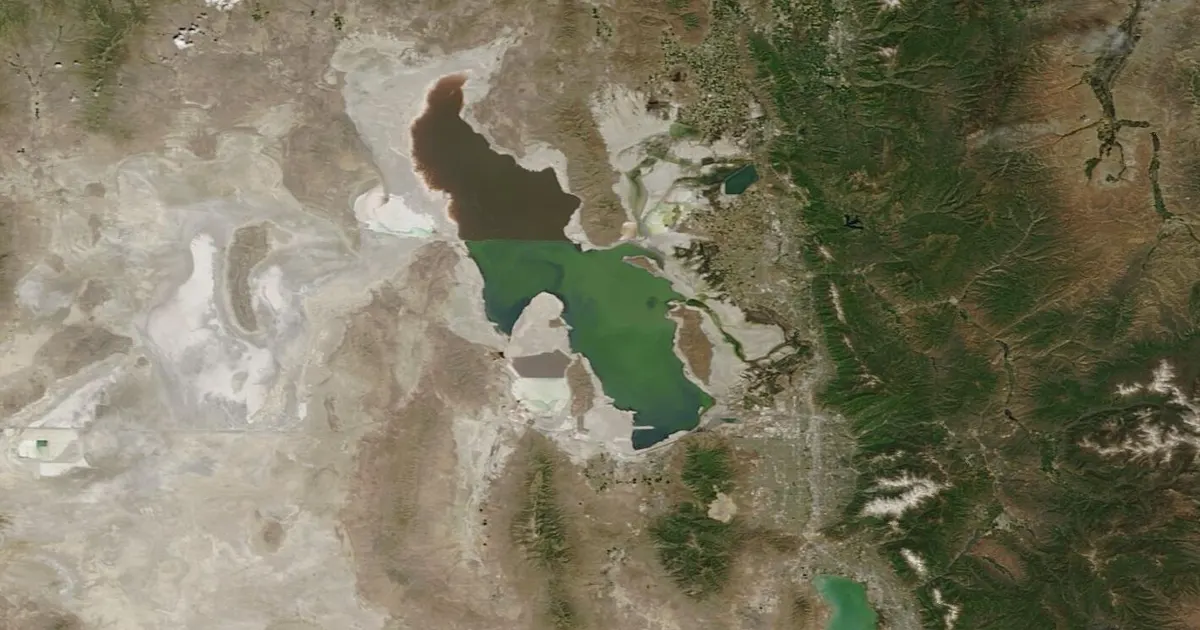
The losses have not stopped. The Caspian Sea has fallen by as much as 30 cm a year since 2020, and a Communications Earth & Environment study warns a drop of just 5 to 10 meters would erase up to 94% of its marine protected areas and strand billions of dollars of infrastructure (Nature). Utah's Great Salt Lake sits at 4,190.40 feet, inches above its 2021 low, and the state's natural resources commissioner calls a record in 2027 "unavoidable" if another dry winter follows; conservation yields 50,000 to 80,000 acre-feet a year against the 1 million the lake needs (Utah News Dispatch). Farmers paid not to plant carry the cost. Watch whether Utah shuts the causeway berm at 4,190 feet.
Go Deeper
Read the original reporting at University of Colorado at Boulder via ScienceDaily.
Read Full Story at University of Colorado at Boulder via ScienceDaily →